








Internship and First-Job Resumes That Do Not Look Empty
 August 20, 2026

Internship and First-Job Resumes That Do Not Look Empty
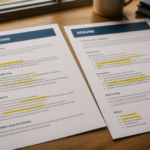
The fear behind a first resume is visual. Too much white space. Too few logos. A page that looks like you have not started yet. The fix is not to invent a career. The fix is to treat school, projects, and part-time work as real evidence, because they are.
Hiring managers who recruit interns and new graduates are not expecting a director’s arc. They are expecting signs that you can learn, finish things, show up, and already know a few tools of the trade.
This article is a practical build for internship and first-job resumes that feel finished without feeling fake.
Lead With the Identity You Are Applying Into
If you want a software internship, the page should not open like a mystery. If you want a hospital volunteer-to-hire path, clinical exposure should not be buried under a restaurant job that only paid the bills — unless the restaurant job is your best proof of reliability, in which case it still belongs, just not as the only story.
Write a three-line profile:
What you are studying or just finished
What you have already made or done in that lane
What you are available for: internship, co-op, full-time, dates, location
“Third-year mechanical engineering student. Built a small HVAC load calculator in Excel for a class and interned in a campus facilities shop. Seeking a summer internship in building systems or energy.”
That is a person. “Hardworking student looking to gain experience” is a placeholder.
Education Is Allowed to Be the Anchor
Include degree, school, expected graduation, GPA if it helps, relevant courses, honors if they are real.
Add a senior design, capstone, thesis, or clinic if it produced a deliverable. Treat it like a job: name, dates, bullets.
“Capstone, Fall 2025. Designed a jig for a local manufacturer; presented drawings and a cost estimate to the shop owner.”
That bullet does more than a GPA by itself.
Projects Are Not Optional When You Have Few Jobs
A projects section is how you fill the page with proof.
Class projects, personal projects, hackathons, student paper, a shop you helped a family member with, a GitHub repo, a campaign for a club, a research assistant task.
Rules:
Name the output
Name your role
Name the tools
Name a result or a constraint
“Personal project” is an acceptable employer if the work is inspectable. Link it.
Do not list ten tiny tutorials. List two or three things a skeptic could ask about.
Internships, Even Short Ones, Get Full Treatment
A six-week internship is still experience. Put the company, the team, the dates, and two to four bullets.
Focus on what you shipped or supported, not on how grateful you were to be there.
“Wrote 12 test cases and logged bugs in Jira for the billing module.”
“Shadowed three physical therapists and prepared treatment-area setup for 8 patients a day.”
Shadowing is weaker than doing, but it is not nothing if you describe the work ethic and the setting. If you only observed, do not claim you treated patients.
Campus Jobs and Student Leadership
Resident advisor, tutor, lab assistant, orientation leader, club treasurer, athlete with real time demands: these show responsibility.
Pick the parts that map. Treasurer is money and vendors. RA is conflict, duty nights, documentation. Tutor is explanation and patience. Captain is scheduling and standards.
One strong campus role can carry a first resume. Five thin clubs cannot. Cut the clubs that were membership only.
Part-Time Work Is Not an Embarrassment
If you worked 20 hours a week in retail while taking 15 credits, that is a stamina story. Tell it with duties that sound like duties: cash, customers, close, inventory, food safety.
You can keep this block shorter if you have relevant internships, but do not delete the only evidence that you have an employer who can get a reference.
Skills Should Be Testable in a Screening Call
List languages, software, lab techniques, shop tools, languages you speak, licenses.
If you put Python, be ready to talk about a script you wrote. If you put Excel, be ready to talk about a formula or a pivot.
A skills section that is honest will be shorter than you want. Short and true beats long and lucky.
Formatting So the Page Looks Intentional
One page is the default. Use the space. If you have only four bullets in the whole document, you have not inventoried your life yet. Go back to the messy list: jobs, projects, sports, family business, volunteering.
Keep design quiet. Links that work. Email you check. Phone with a professional voicemail.
Availability matters for internships. Some students put “Available May–August 2027” in the header or summary. That is useful, not needy.
References and Transcripts
Do not write “references available upon request.” They know. Have a list ready: a professor who knows your work, a supervisor, a coach if relevant. Ask them before you apply.
Transcripts go where the application asks, not as a second resume unless they want it.
What Looks Empty Versus What Looks Early
Empty: no dates, no tools, no output, generic summary, five clubs with no role.
Early but complete: school, two projects, one job, skills you can defend, a clear target.
You cannot skip being early. You can skip looking unfinished.
A Build Sequence for This Weekend
Write the target internship title.
Dump every proof item in 20 minutes.
Choose education, two projects, and one or two work blocks.
Write bullets with verbs and objects.
Add skills.
Write the three-line profile last.
Ask a friend in the field to spend 20 seconds on it and tell you what they think you want.
Then apply to roles that hire people at your stage. A perfect resume sent only to senior postings will still look empty, because the jobs were never for you.
What If You Have No Internship Yet?
Then the resume leans harder on projects, coursework, and any paid work. Apply anyway to internships that accept first-timers. The document should show you have already practiced the work in some smaller form: a class lab, a volunteer shift, a personal build, a campus job with customers.
Waiting until you have an internship to write a resume is a loop that never starts. Write the page with what you have. Let the first internship become the next version.
How to Talk About Group Work Without Looking Like a Passenger
Hiring managers know group projects. They will ask what you owned. Write the bullet so the answer is already there.
“In a team of four, I wrote the market research section and built the slide on competitors; we presented to a local shop owner.”
If you cannot name your piece, either remember it or do not feature that project. One honest solo assignment beats three group myths.
The same rule applies to family businesses and friend startups. Use the real name and the real work. Do not crown yourself CEO of a lawn mower and a group chat.
What to Do If You Still Think the Page Looks Thin
Add one more project with a real output.
Add relevant coursework, not the whole transcript.
Add a volunteer block if you actually showed up on a schedule.
Tighten the summary so it does not waste six lines saying you want experience.
Print the page. If a third of it is empty, you still have inventory work to do. If the page is full of vague lines, you have an editing problem, not a life problem. Replace two duties with two results and the page will look denser without adding a fake job.
You are not behind. You are at the start. A first resume’s job is to get you into a conversation where you can be a beginner in public. Give them enough evidence to take that risk. That is a complete page.