







How to Write a Resume When You Have Little or No Experience
 August 20, 2026

How to Write a Resume When You Have Little or No Experience
“I have nothing to put on a resume” is one of the most common things people say before they write their first one. It is almost never true. What they usually mean is that they have never had a job with a grown-up title, a salary, and a nice LinkedIn banner. That is a real gap in confidence. It is not a blank life.
If you are a student, a recent graduate, a career starter, or someone returning after years away from paid work, you can still write a resume that feels honest and complete. You just cannot copy the format used by someone with 12 years in the same industry. Their document is built around employment. Yours has to be built around proof.
This article shows you how to find that proof, how to arrange it, and how to talk about it without sounding like you are stretching.
You Have More Material Than You Think
Start by dumping everything into a messy list. Do not edit yet. Include:
Part-time jobs, even if they feel small
Internships, job shadows, and campus roles
Class projects that produced something real
Freelance or family business help
Volunteer work with actual responsibility
Sports, arts, or clubs where you organized people or events
Skills you can demonstrate: languages, software, tools, licenses
Any result you can point to: money handled, people taught, events run, pages written, accounts kept
A barista job is experience. So is running the cash drawer without coming up short. So is training two new hires. So is covering a sick shift and still closing on time. The work does not become real only when it happens in an office.
A group project can be experience if you can say what you owned. “Worked on a marketing plan” is thin. “Wrote the competitor analysis and presented it to a local shop owner” is a resume line.
The goal of this messy list is to stop the panic. You are not inventing a career. You are inventorying one that has not been labeled yet.
Choose a Layout That Does Not Highlight the Empty Middle
A standard experienced resume puts work history first and education second. If your work history is two summers of retail, that layout makes the page look unfinished.
Flip the emphasis.
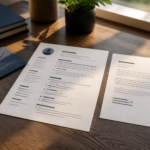
A strong first-resume order often looks like this:
Contact information
A short summary or profile
Skills
Education
Projects
Experience, including part-time and campus work
Volunteer work or extras if they add something
Education can sit high while it is still one of your strongest credentials. Once you have a year or two of relevant work, it can move down. You do not need to wait for permission to make that change.
Projects deserve their own section if they are the best evidence you have. Hiring managers would rather see a finished thing than a vague claim that you are a hard worker.
Write a Summary That Sounds Like a Person, Not a Wish
Skip the old objective. “To obtain an entry-level position where I can grow and utilize my skills” is empty. Everyone wants that.
Write three or four lines that answer: what you are training for, what you already know how to do, and what kind of environment you can handle.
“Recent communications graduate who has written campaign copy for two student organizations and managed a 1,200-follower Instagram account. Comfortable with Canva, Google Analytics basics, and deadline-driven group work. Looking for a junior marketing or content role.”
That is still early-career. It is also specific. The reader can picture you.
If you have no degree yet, say where you are. “Second-year accounting student with a year of cashiering and nightly cash reconciliation” is clearer than hiding school because it is unfinished.
Turn Classwork Into Evidence Without Pretending It Was a Job
You should not title a class project as if you were the CMO of a company. You should describe the work accurately.
Good project bullets:
“Built a 12-page brand audit for a local bakery, including customer interviews and a three-month content calendar.”
“Wrote and documented five SQL queries to clean a public housing dataset for a statistics course.”
“Designed a personal budget tracker in Excel with drop-down categories and a monthly dashboard.”
Name the tools. Name the deliverable. Name your role in the group. If you led, say you led. If you did not, say what you owned. Hiring managers have been in group projects. They can smell “we” that really means “someone else.”
Put the project name, the school or context, and the date. Treat it with the same respect you would give a job, because on an early resume it may carry the same weight.
Make Part-Time Work Look Like Work
People apologize for food service, retail, caregiving, warehousing, and campus jobs. They shrink those roles into one line. That is a mistake.
Those jobs teach attendance, customers, conflict, pace, and money. Junior roles in offices need all of that.
Instead of “Cashier, responsible for customer service,” write:
“Ran the register during peak lunch, processed returns, and balanced the drawer at close.”
“Trained three new cashiers on the POS and store discount policy.”
“Handled customer complaints at the counter and escalated only the cases that needed a manager.”
You are not claiming to be a director of operations. You are showing that you already work with people, tools, and standards. That is the whole point of a first job on a resume.
If you had several similar part-time roles, you can group them. “Retail and customer service roles, 2023–2025” with a few combined bullets can look cleaner than three tiny job blocks that repeat the same duties.
Skills Have to Be Real and Testable
When you lack years, skills become tempting to inflate. Do not.
If you have used Excel for class and can build a simple formula, say “Excel: formulas, pivot tables, charts” only if that is true. If you once opened Excel, do not list it as a core skill.
Language skills, licenses, first aid, forklift certification, Adobe, Figma, Python, cash handling, childcare ratios: these are concrete. “Leadership” and “communication” are not skills on their own. Show them in bullets instead.
A skills section on an early resume works best as short clusters:
Tools: Google Workspace, Canva, Shopify admin
People: cashiering, phone support, new-hire training
Languages: Spanish, conversational
Keep it honest. A 15-minute screening call can test any of this.
Handle the Blank Years With Context, Not Drama
If you were in school, say so. If you were caregiving, you can include it as a role with real scope: household scheduling, medical appointments, budgets. You do not have to. Some people prefer to keep that private. Both choices are valid. If you include it, keep the language factual.
If you have a gap because you were searching, traveling, or recovering, you do not need a paragraph of confession on the resume. The resume can stay focused on school, projects, and available work. You can explain the rest in an interview if asked.
What you should not do is leave mysterious empty space and hope nobody notices. A simple education line with dates already explains a lot.
Formatting Choices That Help a Thin Resume
Use a full page. Do not stretch 200 words into giant margins and 16-point type. Add another project. Add one more specific bullet. Add relevant coursework if the degree is the main credential.
Relevant coursework is useful when it maps to the job: Financial Accounting, Java Programming, Child Development, Technical Writing. Do not list every class you survived.
Keep design quiet. Fancy columns and icons often hurt more than they help, especially in applicant tracking systems. A simple document that reads well will beat a decorative one that says nothing.
Use a normal font. Put dates on the right. Make section headings obvious. Save as PDF unless the posting asks for Word.
A Note on Internships and Unpaid Work
If you interned, put it in experience. Paid or unpaid does not decide whether the work was real. Describe it the same way: scope, tools, results.
If a family member’s business was your first workplace, you can list it. Use the real business name and a real title. Do not invent a corporate structure that was not there. “Handled weekend bookings and customer messages for a family landscaping business” is respectable. “Chief of Staff, GreenLeaf Enterprises” is not, if that company was a truck and a phone.
How to Aim the Document at a Real Job
Even a first resume should be aimed. Read the posting. If they want customer service, lead with the jobs and projects where you dealt with people. If they want software, lead with coursework and GitHub. If they want childcare, lead with babysitting, camp counseling, and any certifications.
You are not faking seniority. You are choosing which true things to put first.
What “Enough” Looks Like
A good first resume usually has:
Clear contact details
A short, specific profile
A skills list you can defend
Education with dates and, if useful, coursework
Two to four proof blocks: jobs, projects, campus roles, or volunteer work
Bullets that sound like actions, not wishes
It does not need to look like a director’s resume. It needs to look like a person who shows up, learns, and already has evidence of both.
Write the messy list today. Build the sections tomorrow. Then send it to roles that actually hire beginners. The first resume is not supposed to win the last job of your career. It is supposed to win the first conversation. That is a smaller, kinder goal, and it is one you can meet with the experience you already have.